Negative Space Either Side: Shelving a Chimney Breast Without Clutter
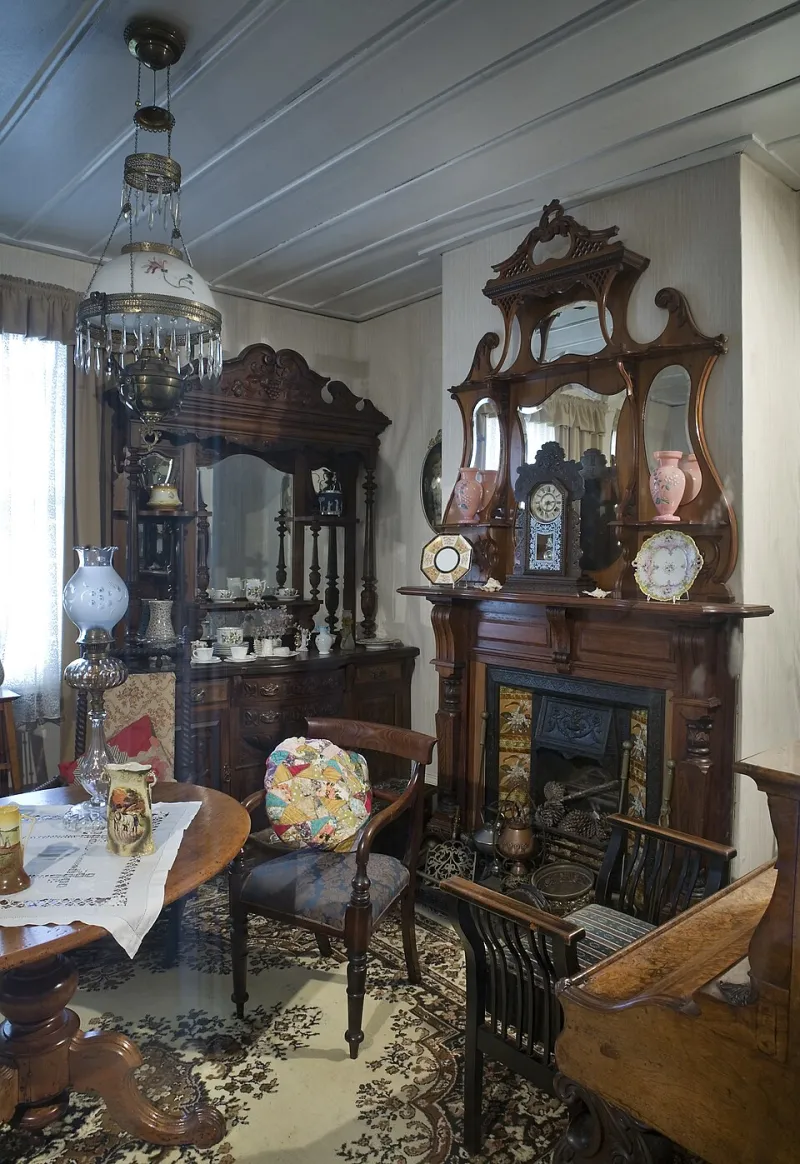
Photo: Jorge Royan, CC BY-SA 3.0, via Wikimedia Commons
In a period British home, the chimney breast is often the spine of the room. The alcoves either side look like a gift: free storage, neatly recessed, just waiting for books and baskets. But anyone who has lived with a crammed alcove knows the truth. Shallow depth, awkward skirting, uneven plaster and a tendency to absorb stray cables and paperwork can turn a handsome architectural feature into visual noise. The aim is not to fill every cubic centimetre. It is to make the alcove feel like a deliberate pause in the room.
Start with a tape, not a trolley
Before you buy a single shelf, measure properly. Alcove depth is rarely consistent: check at floor level, waist height and eye level, because old plaster and skirting can steal several centimetres. Measure the width at the front and the back, the height to the ceiling, and the height and projection of the skirting board. If there is a cornice, note how far it comes down. Also check for radiators, sockets, gas meters, alarm wiring and any signs of damp. In Victorian and Edwardian houses, the chimney breast may project 30cm or more, so the alcove can be surprisingly shallow once you allow for clearance.
Mark your measurements on the wall with masking tape. It sounds fussy, but it stops you ordering a bookcase that arrives 2cm too wide. For built-in joinery, leave a small expansion gap and plan for scribed filler strips where the wall waves in and out. Old houses move; your shelving should not fight them.
Open, closed, or a bit of both
The first real decision is what you want to look at. Open shelves are brilliant for display, but every object is on show, including the ugly ones. Closed cupboards hide clutter, but a full bank of doors can make a narrow alcove feel like a wardrobe. A hybrid often works best: closed cupboards below, open shelving above. A lower section around 750–900mm high gives you somewhere to hide board games, chargers and the inevitable pile of post, while the upper shelves can breathe.
Depth matters more than most guides admit. Standard paperbacks need about 200mm; larger books and framed photographs want 250–300mm. If the alcove is only 300mm deep, a 350mm shelf will stick out into the room and catch your shoulder. Measure the objects you actually own, not the ones you imagine owning. Vary shelf spacing rather than setting every level at the same height. A tall gap for a vase or a lamp, a tighter run for books, and one nearly empty shelf will do more for the room than perfect symmetry.
The renter-friendly route
Not everyone can commission joinery, and plenty of us should not drill into a landlord's plasterboard without a plan. Freestanding bookcases are the obvious answer, but they need to fit properly. Leave a little breathing space either side, and use anti-tip straps. Avoid anything that blocks a radiator or makes it hard to open a window. A slim console with baskets underneath can work in a shallow alcove, as can a glass display cabinet if you want the look of built-in shelving without the commitment.
If you can drill but do not want built-in joinery, floating shelves fixed to timber battens are a good middle ground. The battens must go into masonry or into proper studs, not just plasterboard. Heavy shelves full of books need serious fixings; a hollow-wall plug alone is not enough. In rental homes, battery-powered picture lights and plug-in wall sconces with cable trunking can add the finishing touch without a rewire.
Sort the light before the first book
Alcoves are naturally dark. A shelf packed with objects in a shadowy recess just looks like a junk shop. Plan lighting early, ideally before the shelves go up. Wall lights, picture lights or a small lamp on the lower cupboard will graze the contents and make the alcove feel intentional. Warm white bulbs around 2700K are usually kinder than cool white. If you are renting, adhesive-backed puck lights or a plug-in sconce can work well; just keep cables tidy and avoid anything that looks like a permanent installation.
Edit, do not hoard
The hardest part is what goes on the shelves. An alcove should not become the home for everything that lacks a home elsewhere. Baskets are useful, but only for things you actually use. Cables, old paperwork and random chargers belong in a cupboard, not on display. Try a simple rhythm: books at the back, a few chosen objects in front, and a clear gap at the end of each shelf. Rotate displays when they start to blur. One shelf that is almost empty will make the whole room feel calmer.
Finally, remember the chimney breast itself. A mirror, a piece of art or a clock above the fireplace can tie the two alcoves together. The shelves should frame the breast, not compete with it. Stand in the doorway when you are finished. Can you see surfaces? Does the wall feel quieter? If every shelf is crammed, take a third of it away. The alcove is not a storage unit. It is a bit of architecture, and it deserves the negative space.