Headroom Is a Feeling: Furnishing a Room That Stops at Your Shoulders
Stand in the middle of a 2.3-metre room and look up. Nothing dramatic happens. The ceiling is low, but it is not oppressive. Then someone hangs a pendant light, adds a tall wardrobe and a high-backed sofa, and the room starts to feel like a conversation you are having with your shoulders hunched. The number on the floor plan is rarely the problem. The problem is what we put in the room that draws the eye upward and then stops it dead.
Low ceilings are a fact of life in plenty of British homes: Victorian terraces with later loft conversions, 1930s semis with box rooms, post-war flats where every centimetre was fought over. You cannot raise the ceiling without a builder and a serious budget. You can, however, change how the room reads. Headroom is as much a feeling as a measurement.
Start with the ceiling line, not the floor
Most of us furnish from the ground up. We choose a sofa, then a rug, then a lamp. In a low room, it pays to work from the top down. Before you buy anything, look at the uninterrupted wall space between the skirting and the ceiling. That blank band is your friend. Furniture that sits below it lets the eye travel around the room without interruption, which makes the walls feel taller than they are.
The moment you place a tall bookcase, a wardrobe or a high-backed chair against that wall, you create a visual full stop. One tall piece can be fine. Three tall pieces in a small room and the ceiling starts to press down. Aim for a low horizon line: most of your furniture should sit below the halfway point of the wall, with perhaps one deliberate vertical element for contrast.
Low profiles, not low standards
A low-profile sofa is the single most useful purchase in a low-ceilinged living room. Look at the back height, not just the seat height. A sofa with a back that tops out around 70–75cm will leave a clear gap of wall above it. A high-backed model at 95cm or more will crowd the room, especially if it sits against the main wall.
Visible legs help, too. A sofa raised on slim wooden or metal legs lets light and floor space run underneath it, which reads as airiness. A skirted sofa that sits flush to the floor is visually heavier. Neither is wrong, but in a room with very little vertical breathing space, the leggy option usually wins.
Arms matter as well. Chunky, rolled arms add bulk at exactly the height where you want lightness. Slim arms and a clean back line keep the silhouette quiet. If you need comfort, spend it on the seat cushion rather than the frame.
Vertical lines are your friends, if they are thin
There is a useful contradiction in low rooms: vertical lines can make a ceiling feel higher, but heavy vertical furniture makes it feel lower. The trick is thinness. Floor-to-ceiling curtains hung close to the ceiling draw the eye up without adding visual weight. A tall, narrow mirror does the same. Slim open shelving, vertical tongue-and-groove panelling and a narrow column of framed pictures all suggest height without blocking the room.
What you want to avoid is the tall, dark, solid rectangle. A single wardrobe in a pale finish may be fine. A wall of dark timber cabinetry in a 2.3-metre room will feel like a ceiling beam that has come down to stay.
Take light off the ceiling
Pendant lights are the quiet headroom thieves of British homes. A hanging shade drops 30–50cm into the room before you have even switched it on. In a low room, that is the difference between a ceiling that clears your head and one that seems to follow you around.
Wall lights are the obvious swap. A pair of slim wall-mounted lights at eye level, or a picture light above a favourite print, keeps illumination where you need it without stealing vertical space. If you rent and cannot wire anything in, plug-in wall lights and rechargeable picture lights have become genuinely good. Floor lamps with a low shade work too, as long as the shade does not sit at head height in the middle of the room.
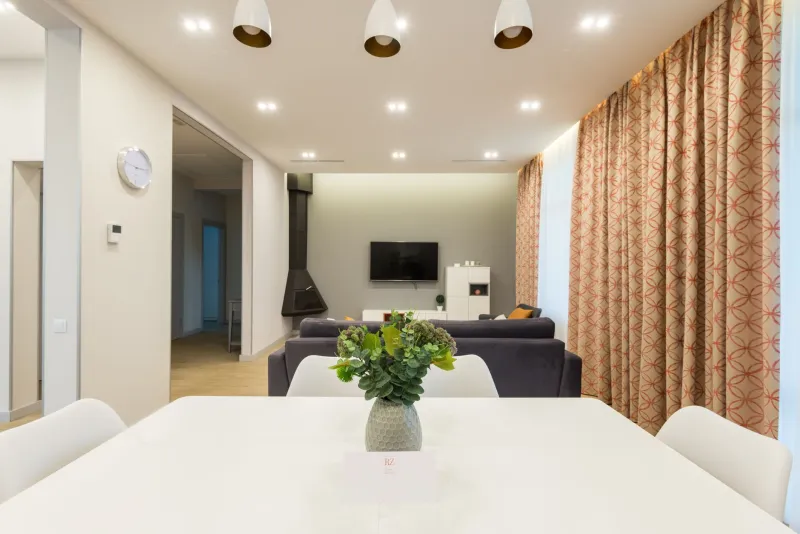
In a dining area, a pendant over the table is less of a problem because you are seated when you use it. Just keep it close to the tabletop rather than dangling into the middle of the room.
Mirrors: place them where they double the floor
A mirror in a low room should reflect something worth looking at, ideally a window or a long stretch of floor. Leaning a large, thin-framed mirror against a wall and angling it slightly outward can make a narrow room feel wider and a low room feel less capped. Avoid hanging mirrors high up near the ceiling; that draws attention to the very line you are trying to soften. And do not point a mirror at a cluttered corner. It will double the clutter, not the space.
The quiet headroom thieves
Some furniture steals height without announcing itself. Tall headboards are a common culprit in small bedrooms. So are wardrobes that run right up to the ceiling, especially in dark colours. Wall-mounted cabinets above a desk or sofa can be useful, but they press down on the space below. High shelves packed with books create a heavy band at the top of the wall.
Then there are the decorative choices: a bulky ceiling rose, a large ceiling fan, a heavy cornice that seems to lower the room by ten centimetres. In a low-ceilinged property, simplicity at the top of the room usually pays. If you have original coving, keep it, but do not add more.
Room by room
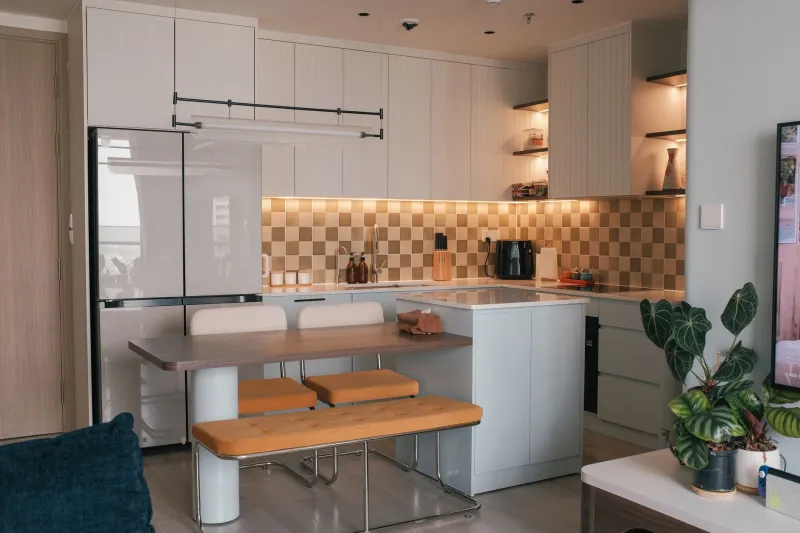
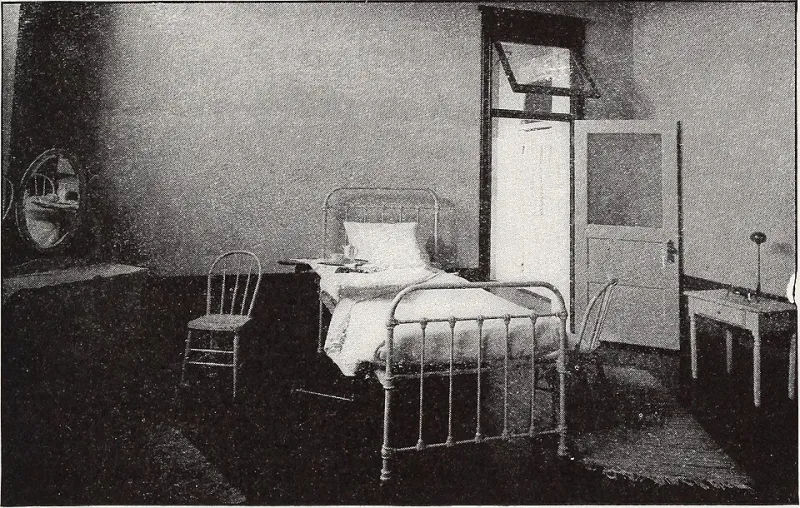
In the living room, think low sofa, low coffee table and wall lighting. A glass or pale timber coffee table keeps the floor visible. In the bedroom, choose a bed frame with a low or shallow headboard, and keep bedside tables below mattress height. An open clothes rail can work better than a tall wardrobe because it lets light through. In the dining room, low-back chairs and a round table reduce the number of hard vertical edges. In the hallway, a slim console and a mirror will do more for the sense of space than a tall shoe cabinet.
Mistakes to avoid
Do not buy furniture marketed as “compact” without checking the height. Compact often means narrow, not low. Do not match every piece to the same tall height, and do not push everything against the walls. A little breathing space around low furniture makes the ceiling feel further away. Finally, do not paint the ceiling a heavy colour unless you are confident about the light. A pale ceiling that blends gently with the walls will usually feel more generous than a stark white lid above darker walls.
A low ceiling is not a flaw to be fixed. It is a constraint to be furnished around. Measure the height of your sofa back, your wardrobe and your pendant before you buy. Then give the room the one thing it really needs: a clear line of sight above the furniture, and the feeling that you could stand up straight even if you already are.