The Tree Is a Tenant: Six Weeks of Living-Room Furniture Planning
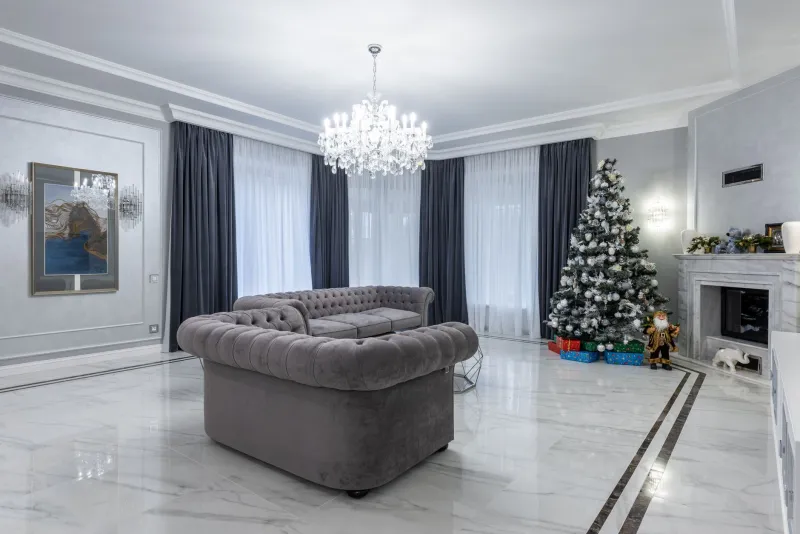
Every December, a large green object moves into British living rooms and quietly takes over. It doesn't pay rent, it blocks a socket, and it makes the armchair look like an afterthought. The tree isn't just decoration — it's a six-week furniture problem, and the best time to solve it is a fortnight before you buy the thing.
Here's how to plan the room properly, so the festive season doesn't cost you your seating, your lighting, or your route to the radiator.
Start With the Stand, Not the Star
Most people measure the ceiling and stop there. The ceiling is rarely the issue. The issue is the base.
A typical 6ft UK tree with a decent spread will occupy the best part of a metre across at its widest point, and the stand beneath it adds another 50–60cm of hard plastic you'll be walking around in the dark. Add a tree skirt, a sack of presents, and the watering can you'll inevitably keep nearby, and you're looking at a genuine piece of furniture.
So get the stand out of the loft now, put it on the floor, and mark its footprint with masking tape. Then add a border: 20cm on the sides for lower branches, 30cm at the front for gifts. That taped rectangle is your new no-go zone. If it swallows the only route to the sofa, you've learned that in November rather than on the 20th of December.
A note on scale: in a small flat, a 5ft tree with a narrow spread will always look better than a 7ft tree that turns the room into a corridor. Nobody has ever walked into a room and complained about a modest tree.
The Walkway Nobody Measures
We talk a lot about seating distances, but the path through a room is what actually makes it feel calm. Aim to keep at least 60cm clear along the main route — from the door, past the sofa, towards the kitchen.
Two things usually break this. The first is the tree itself, placed in a corner that turned out to be the natural through-route. The second is the furniture you shove aside to make room for it, which ends up in the walkway instead.
Walk the route yourself, in the dark, with the main light off. If you'd trip over a stand or clip a low branch on the way to the loo at 2am, move the tree.
Don't Bury the Radiator
This is the one that costs you comfort rather than space. A tree pressed against a radiator blocks the heat it was designed to throw into the room, dries out its own needles at an alarming rate, and creates a fire risk if you're using lights on a real tree.
Leave 30–40cm between the tree and any radiator, and never drape anything over the top. If your only sensible spot is beside the radiator rather than in front of it, that's fine — just keep the gap. On very cold evenings you'll be grateful the room still warms up.
Sockets, Cables and the Tripwire
Count your sockets before you commit. A tree in the corner will almost certainly cover one, and that socket is probably the one running the lamp that makes the room usable after dark.
Plan for it rather than discovering it. Options include a slim extension lead run along the skirting with proper cable trunking, a timer plug so the lights aren't left on, and a battery-powered lamp or two so you're not dependent on the hidden socket. Never run a cable across a walkway, even under a rug — rug edges lift, and someone will catch a foot on it.
If you're using a real tree, keep the water top-up accessible. A tree you can't water is a tree that drops by the 15th.
Where the Side Table Goes to Live
Losing a side table is the quiet tragedy of December. The lamp has nowhere to sit, the mug ends up on the floor, and the room feels unfinished at exactly the moment you want it to feel generous.
Instead of losing the table, swap it. A nesting table, a slim console behind the sofa, or a small stool doing temporary duty will get you through the six weeks. If the displaced table has to go somewhere, make it the bedroom or hallway rather than wedged against a wall in the living room, where it will simply become an obstacle.
The Seating Question
You will probably lose a chair. The trick is choosing which one, and doing it deliberately.
If an armchair is the casualty, consider whether the sofa alone can carry the room for six weeks. If not, an upright occasional chair that tucks into a corner is a better temporary resident than a deep armchair that eats 90cm of floor. Angling the sofa slightly can also open up a corner for the tree without costing you a seat — just check you're not now staring at the telly from an odd angle.
Repositioning beats removing. Every piece you take out of the room has to go somewhere, and 'somewhere' in a British home is usually the landing.
Storage That Earns Its Six Weeks
Clear one shelf, one basket, one spot in the under-stair cupboard before the decorations come down from the loft. A lidded basket beside the sofa will hold the things that normally live on the coffee table — remote, book, glasses, the miscellaneous pile — and it'll look intentional rather than panicked.
Avoid stacking displaced items on the floor. It's the fastest way to make a room feel cramped at the exact time of year you want it to feel full.
Choose Furniture That Comes Back Easily
If you're buying anything in the next few weeks — even a Christmas-present-to-self side table — think about whether you can move it alone. Light pieces with felt pads underneath will slide back into place in January without a second pair of hands or a scratched floor.
Heavy sideboards and solid oak coffee tables are lovely, but they don't forgive a six-week relocation. Anything you can't shift in a minute is going to stay in its compromised position until February.
Plan January Now
Before the tree goes up, take a photo of the room as it is today. Note where the lamp sat, which side the armchair was on, and how far the coffee table was from the sofa. Keep the masking tape mark on the carpet, or photograph it.
On the day the tree comes down, you'll be tired and the room will look strange and empty. Having a record of how it worked before saves you from a week of shuffling furniture around in the dark.
The Short Version
- Tape the stand's footprint plus 20–30cm, before you buy the tree
- Keep 60cm of walkway clear and test it in low light
- Leave 30–40cm between the tree and any radiator
- Sacrifice sockets deliberately, not accidentally
- Swap side tables rather than losing them
- Move one seat, not three
- Photograph the room for January
Six weeks is a long time in a small living room. A bit of measuring now means the tree is a guest, not a takeover.