The Guest Bed Is Doing Too Much: A Practical Guide to Sleeping Visitors in Small UK Homes
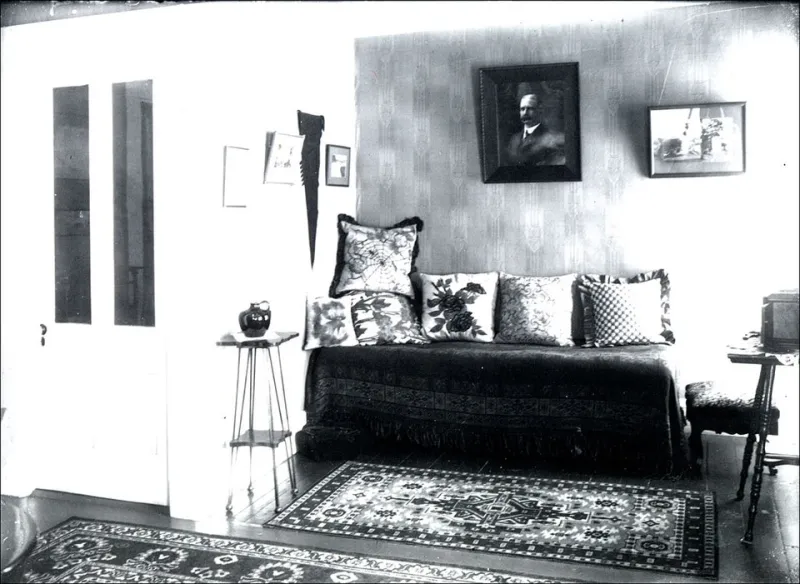
Photo: Keene and Cheshire County (NH) Historical Photos, No restrictions, via Wikimedia Commons
Guest beds have a strange job in a small UK home. They are bought for a hypothetical visitor, used three times a year and expected to behave like a sofa, a spare room and a storage unit for the other 362 days. No wonder so many of them are uncomfortable. The right choice is less about the cleverest mechanism and more about the honest answer to one question: how often do people actually sleep here?
If the answer is once or twice a year, a folding guest bed or a decent chair bed may be all you need. If it is twice a month, a sofa bed that doubles as your main sofa needs to be good at both jobs. If it is most weekends, stop pretending the box room is a study and give the guest a proper bed. The trend towards dual-purpose rooms is sensible, but it only works when the furniture is chosen for real life rather than the panic before a family visit.
Sofa beds: convenient, but check the open footprint
A sofa bed is the default choice in a living room, and for good reason. It keeps everyday seating in place and turns into a bed when needed. The catch is that a sofa bed has two lives, and cheap ones often do neither job well. Sit on it as a sofa before you buy. Lie on it as a bed. If the mattress is thin, the bars are obvious or the mechanism needs a wrestling match, walk away.
Measure the open footprint, not just the closed one. A two-seater sofa bed may be compact as a sofa but need a large clear area when unfolded. Check the clearance to the coffee table, the door, the radiator and the TV unit. Also think about where the bedding will live. A sofa bed without a nearby ottoman or cupboard for duvets is a sofa bed with a permanent pile of linen on top.
For a main living room, a high-quality sofa bed with a sprung or pocket-sprung mattress is worth the extra spend. For a room that is mostly a spare sitting room, a simpler model may be fine. Just do not buy a sofa bed for a guest who stays for a week and expect them to treat it like a hotel.
Daybeds: the quiet all-rounder
A daybed is often the most sensible answer in a box room, study or small spare room. It looks like a sofa, sits against a wall and takes a standard single or small double mattress. By day it is a place to read, work or drink coffee. By night it is a proper flat sleeping surface. There is no mechanism to fight with and no sofa bed bar to negotiate.
Measure the depth carefully. A daybed is usually around 90cm to 100cm deep, which is fine in a box room but can dominate a narrow study. Leave space for a small side table and a lamp, and choose a mattress that is comfortable enough for adults rather than a thin futon pad. A daybed also needs a wall to sit against, so check the radiator position and any awkward chimney breast.
This is the option for people who want a guest bed to feel like furniture rather than a contraption. It suits a spare room that is used for work, a landing with a wide alcove or a living room in a one-bed flat where the sofa is already spoken for.
Chair beds: for one night, not one week
A chair bed is a clever space saver for a studio, a tiny flat or a room where even a daybed feels greedy. It works as an armchair by day and unfolds into a single bed. The best versions have a decent mattress and a simple mechanism. The worst versions feel like sleeping on a folded-up sofa with a metal bar in the middle.
Be honest about the guest. A chair bed is fine for a teenager, a short weekend visitor or an emergency stopover. It is not the kindest choice for an older relative or anyone staying more than a couple of nights. Check the open length and width, and make sure the chair has room to unfold without trapping a door or blocking a walkway.
Chair beds suit a one-bed flat where the living room has to do everything, or a small spare room that is mostly an office. They are less good in a main living room if you need comfortable everyday seating for more than one person.
Folding guest beds: the flexible standby
A folding guest bed is the least furniture-like option, and that is its strength. It folds away, stores in a cupboard or under a bed and comes out when needed. Modern versions are far better than the old put-you-up, with thicker mattresses and sturdier frames, but they are still occasional beds. They are ideal for a renter who cannot replace a sofa, a household that hosts children or a flat where a spare room is simply not available.
Measure the storage space before you buy. A folded bed still takes up room, and a heavy frame is no fun to haul out of a loft. Check the assembled length and width, and allow a little space to get in and out. A folding bed is also best paired with a proper mattress topper and a nearby lamp, so the guest does not feel like they are camping in the sitting room.
What to measure before you choose
The first measurement is the room, not the bed. Mark the open footprint with tape and walk around it. Add space for a bedside table, a lamp and somewhere to put a phone. Check door swings, radiator clearance and the route from the hallway. A bed that fits the room but blocks the only door is not a bed that fits.
Know the standard UK sizes. A single mattress is usually 90cm by 190cm; a double is 135cm by 190cm; a king is 150cm by 200cm. Sofa beds and chair beds often have their own dimensions, so ignore the label and measure the sleeping surface. If your guest is tall, check the length. If your guest is less mobile, check the height of the bed and how easy it is to get up from.
Finally, think about the everyday room. A guest bed should not make the room worse for the people who live there. If the sofa becomes uncomfortable, the armchair blocks the window or the spare room becomes impossible to work in, the guest furniture is doing too much. Choose the option that suits your real frequency of visitors, your real floor plan and your real tolerance for folding things away.
Which option suits which UK home?
In a studio or one-bed flat, a chair bed or a folding guest bed is usually the most practical. A daybed can work if the living room is generous enough. In a Victorian terrace with a through lounge, a good sofa bed is a sensible compromise, provided you measure the open footprint. In a box room or small spare room, a daybed is often the sweet spot. In a home where guests stay often, a proper single or double bed wins every time.
The guest bed is not really a magic trick. It is a piece of furniture with a job to do. Buy for the number of nights, not the number of possibilities, and everyone sleeps better.