Goodbye, Greige: The Slow Unravelling of Britain's Love Affair With the Grey Sofa
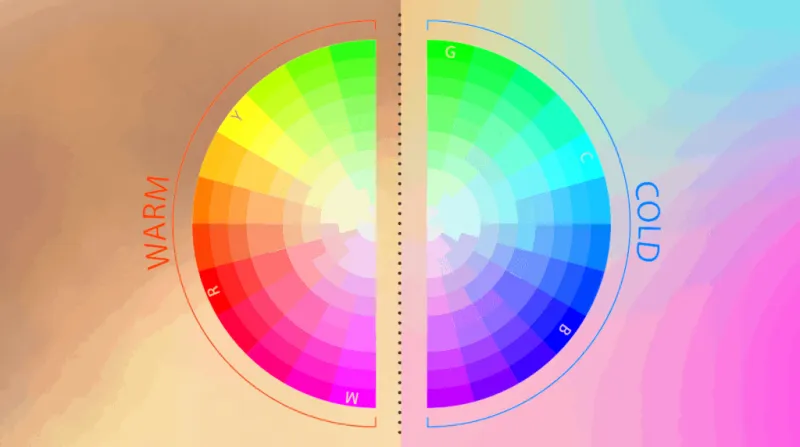
Photo: warm oatmeal textured fabric sofa in cosy British living room with period features, via www.easyrest.com
For the best part of fifteen years, the grey sofa was the safest purchase in Britain. It went with everything, it hid a certain amount of wear, and it never once made a homeowner look foolish. That was precisely the problem. A piece of furniture chosen because it cannot offend anyone is a piece of furniture nobody ever loves, and the living rooms of the 2010s filled up with the same soft, apologetic grey.
There are signs that the spell is breaking. Warmer tones are creeping back into showrooms, textured weaves are outselling flat ones, and the phrase 'I just want something with a bit more character' has become the most common sentence in the upholstery department. This is not a moral judgement on a perfectly decent colour. It is an observation that the default has stopped being a sensible one.
How grey became the default in the first place
The answer is mostly property television and the sample book. Grey arrived as part of a broader neutrals palette that made homes easier to sell and easier to photograph — a colour that flattered a wide-angle lens and never clashed with a kitchen worktop. Add in a decade of rental flats finished in the same shade and the result was a national aesthetic so uniform you could walk into a stranger's house in Leeds and know exactly what their cushions looked like.
Grey also did a genuine job in small, dark rooms. Mid-tones recede, they make a cramped bay window feel less crowded, and they flatter almost any art print. That is worth acknowledging before we throw the whole thing out.
What changed, and why now
The shift is less about fashion than about how people want to feel at home. After years of rooms designed to look tidy and photogenic, there is an appetite for rooms that look lived in — warmer, softer, a bit more personal. Earthy tones, clay and rust, deep olive, oatmeal and warm stone have all moved from the margins into the mainstream, and they sit far more comfortably alongside the period features that British houses quietly specialise in.
Texture has followed. Bouclé had its moment, but the lasting change is that people are now buying fabrics they can feel — slubby linen blends, chunky weaves, brushed cotton — rather than smooth flat plains chosen entirely from a swatch the size of a coaster.
The British light problem
Here is the practical argument, and it is stronger than any trend piece. British daylight is famously unreliable: low, cool and often indirect for much of the year. A cool grey sofa in a north-facing sitting room under a cloudy sky reads as flat and slightly grey-blue, and the room feels colder than its actual temperature. The same room with a warm oatmeal or soft camel sofa feels noticeably different, even with the heating off.
That is not a trick of the imagination. It is a question of what tone the largest surface in the room is bouncing back at you, and in a country where that surface is often the biggest thing you own, it matters.
What is replacing it
Warm neutrals and earthy colours
Oatmeal, mushroom, dove, clay, sage and deep forest green are all doing the heavy lifting now. The trick with a strong colour is to keep the shape simple so the piece reads as confident rather than busy. A deep green in a plain linen weave is a classic in the making; the same green in a heavy pile with a lot going on is a gamble.
Texture instead of pattern
If you want a sofa to hold its own in a room without shouting, texture is the answer. A visible weave adds depth, hides the odd mark, and looks better as it ages. It also photographs beautifully without needing to be the centre of attention.
Shape: lower, deeper, softer
Silhouettes have relaxed. Slim legs and buttoned backs are giving way to low, deep seats with rounded arms and generous cushioning. In a period property this combination works particularly well because a soft shape contrasts with hard architectural lines — a square bay, a cast-iron radiator, a picture rail.
Modular, done properly
Modular seating is everywhere, and it deserves a caution. A modular corner unit can be wonderful in an open-plan space and a disaster in a Victorian terrace sitting room, where it can swallow the entire floor and leave no route to the window. Buy modular for flexibility, not for the photograph — and measure the chaise against the actual walkway, not the idealised one.
Choosing for a real British home
The gap between a showroom and a semidetached house in Sheffield is wider than most retailers admit. A few things worth checking before you commit:
- The route in. Measure the front door, the hallway and the turn at the top of the stairs. A deep two-seater that will not go round the bend is an expensive lesson.
- The bay window. Sofas in bays are usually shallower than people expect once the curtains are up. Check the depth against the window reveal, not the wall.
- Radiators. Never block one. It is the fastest way to make a warm room feel cold and an expensive heating bill feel pointless.
- Pets and children. Tight weaves beat loose ones, removable covers beat fixed, and a slightly darker mid-tone beats anything described as 'oat'. Consider a washable slipcover rather than a compromise on colour.
- Filling. Foam and fibre mixes hold their shape better than pure fibre, which needs plumping daily. If you like a sink-in feel, look for a sprung seat rather than a soft one that will flatten within two years.
The verdict
The grey sofa is not going anywhere — and in a genuinely small, genuinely dark room it remains a sensible, flattering choice. But sensible is no longer the same as default. In 2026 the better question is not 'what will go with everything?' but 'what will this particular room, with this particular light and these particular people in it, actually feel like at seven o'clock on a November evening?' Warmer, most of us are deciding. And warmer is a decent place to start.