Heat First, Furniture Second: Planning a Room Around the Radiator You Can't Move
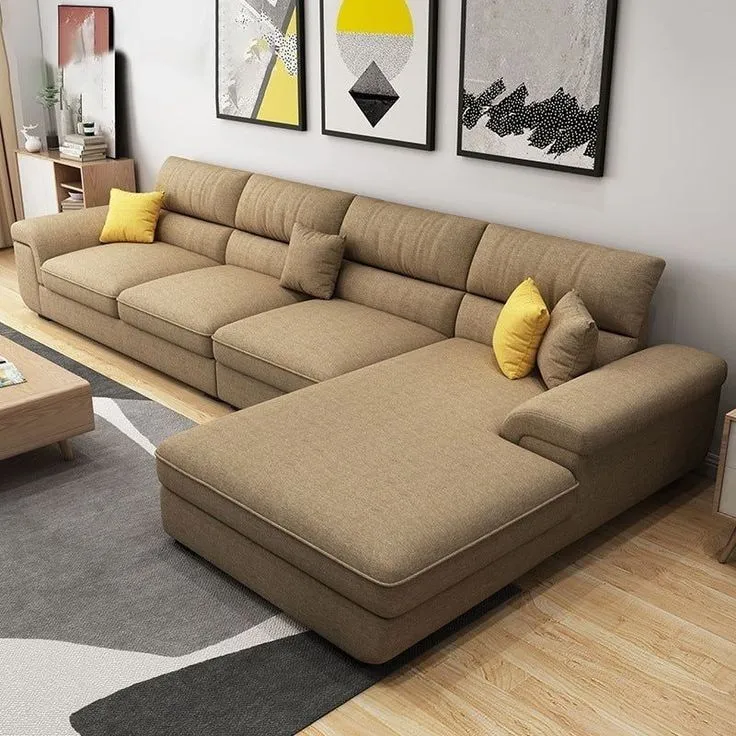
Photo: sofa pulled slightly away from radiator in cosy British living room, via i.pinimg.com
It usually starts the same way. You measure the wall, you measure the sofa, you convince yourself the gap will be fine — and then the radiator, bolted under the front window at some point in the 1980s, has other ideas.
In a lot of British homes the heating went in long before anyone thought hard about how the rooms would be lived in. Radiators sit under windows, in chimney breast alcoves, behind the door. Storage heaters claim a whole corner. Underfloor vents turn up roughly where a rug wants to go. Planning furniture around them isn't a design flourish; it's the first job.
Start with the heat, then draw the room
The temptation is to sketch the layout you want and squeeze the heating in afterwards. Do it the other way round. Walk into the room on a cold morning, put a hand near each heat source, and note which ones actually run hot and for how long. A modern panel radiator under a window behaves very differently from a 1990s storage heater in a hallway, and it's worth knowing which is which before you commit to a corner sofa.
Once you know where the heat lives, the rest of the plan tends to fall into place — or at least reveals which walls are genuinely free.
The clearance numbers worth remembering
Manufacturers' guidance varies, but these are sensible working figures for a typical UK home:
- Above a panel radiator: leave at least 15cm of clear air over the top so convection can do its job. A shelf or sill sitting immediately above kills the output.
- In front of the radiator: 10–15cm minimum to the back of any furniture, and 30cm or more wherever upholstery or solid timber is involved.
- Storage heaters: they run hotter and stay warm for hours after the meter clicks off. Treat 30cm as a floor, not a target.
- Underfloor vents and grilles: keep 20–30cm clear, and never park a rug or a low sofa over them. You'll get a cold room and a warm rug.
- Thermostatic valves: check you can still reach them. A sofa that pins a TRV to the 'off' position is a problem you'll only discover in December.
None of this is dramatic. It's just the difference between a room that heats properly and one where you end up nudging the thermostat up to compensate.
What heat actually does to furniture
This is the bit people underestimate. A radiator isn't a candle; it won't scorch a sofa. What it does is dry the air around it, slowly, over years.
Solid timber and veneered board respond by losing moisture. Joints shrink, panels cup, veneer lifts at the edges. Oak and walnut are more forgiving than pine, but none of them enjoy being cooked. Leather dries and cracks along the creases, and once it's gone, it's gone. Foam cushions lose their bounce faster, which is why the seat nearest the radiator always feels flatter than its twin.
Fabric is subtler. Natural fibres embrittle, and sunlight through the window does the rest. If you've ever wondered why one arm of a sofa has faded to a different shade of grey, the radiator and the window have probably been working as a team.
The practical answer is distance. If you can't manage 30cm, rotate the piece so its back isn't against the radiator, or choose something with an open frame that lets air move behind it.
Terraces, flats and the chimney breast problem
Victorian and Edwardian terraces are the hardest case. The front room usually has a bay window, a radiator beneath it, a chimney breast in the middle and a doorway to one side. Three of the four walls are compromised before you've unpacked a single cushion.
The classic solution — sofa against the chimney breast — still works, and leaves the radiator wall as a circulation route rather than a seating zone. In a narrow mid-terrace, that's often the only way to get a decent seating group without blocking the fire.
New-build flats throw up a different obstacle. Radiators are often small, high-mounted, or tucked behind doors, and the open-plan living space shares a wall with the kitchen. Here the win is usually to keep one long wall completely clear of both heat and furniture, so the room reads as bigger than its square metres suggest.
Radiator covers: useful, but not free
A well-made cover will hide a tired radiator and give you a shelf for books. It will also cut heat output, typically by 10–20% and more if it's tightly boxed in MDF with no vents.
If you go for one, insist on a slatted or louvred top and an open base, and keep the valve accessible. A cover that turns a working radiator into decoration is a false economy in a cold flat. A shallow shelf fitted a hand's width above the top of the radiator is a better bet — it deflects warm air out into the room rather than straight up the window.
Furniture that works with heat rather than against it
Some pieces are simply better suited to life near a heat source:
- Open-leg sofas and chairs — air moves underneath and the frame stays cooler.
- Cane, rattan and slatted timber — no upholstery to dry out, and the texture suits period rooms.
- Wall-hung consoles and shelves — off the floor and less of a heat trap, though still worth keeping 30cm from the radiator face.
- Shallow benches and window seats — a 35cm-deep bench in front of a radiator blocks far less than a 95cm sofa.
- Metal and glass side tables — indifferent to dry air.
If you want the radiator wall to do something, a slim console with a lamp and a pair of framed prints is usually enough. It reads as intentional rather than as a gap.
The compromise that normally wins
Most UK rooms end up with one honest compromise: the sofa sits slightly further into the room than the tape measure promised, and the space behind it becomes a slim console, a plant, or nothing at all. It's not the layout you'd draw on a blank page, but it's the one that keeps the room warm, the furniture intact and the walkway usable.
Plan the heat first. The furniture will follow — and it'll last longer for it.